


Public washrooms are used by everyone, but direct contact with unhygienic toilet surfaces can be easily avoided by using a toilet seat cover via a toilet seat cover dispenser. One of the simplest and most effective hygiene solutions, toilet seat covers create a protective barrier that reduces germ exposure and improves comfort in shared toilets. Knowing how to use toilet seat covers correctly—and how to put a toilet seat cover on properly—helps maintain better personal hygiene and encourages safer, more responsible washroom habits.
Why Toilet Seat Hygiene Matters More Than Ever
Toilet seats are high-contact surfaces used by hundreds of people daily in public and commercial spaces. Even when cleaned regularly, these surfaces can still carry bacteria due to frequent usage.
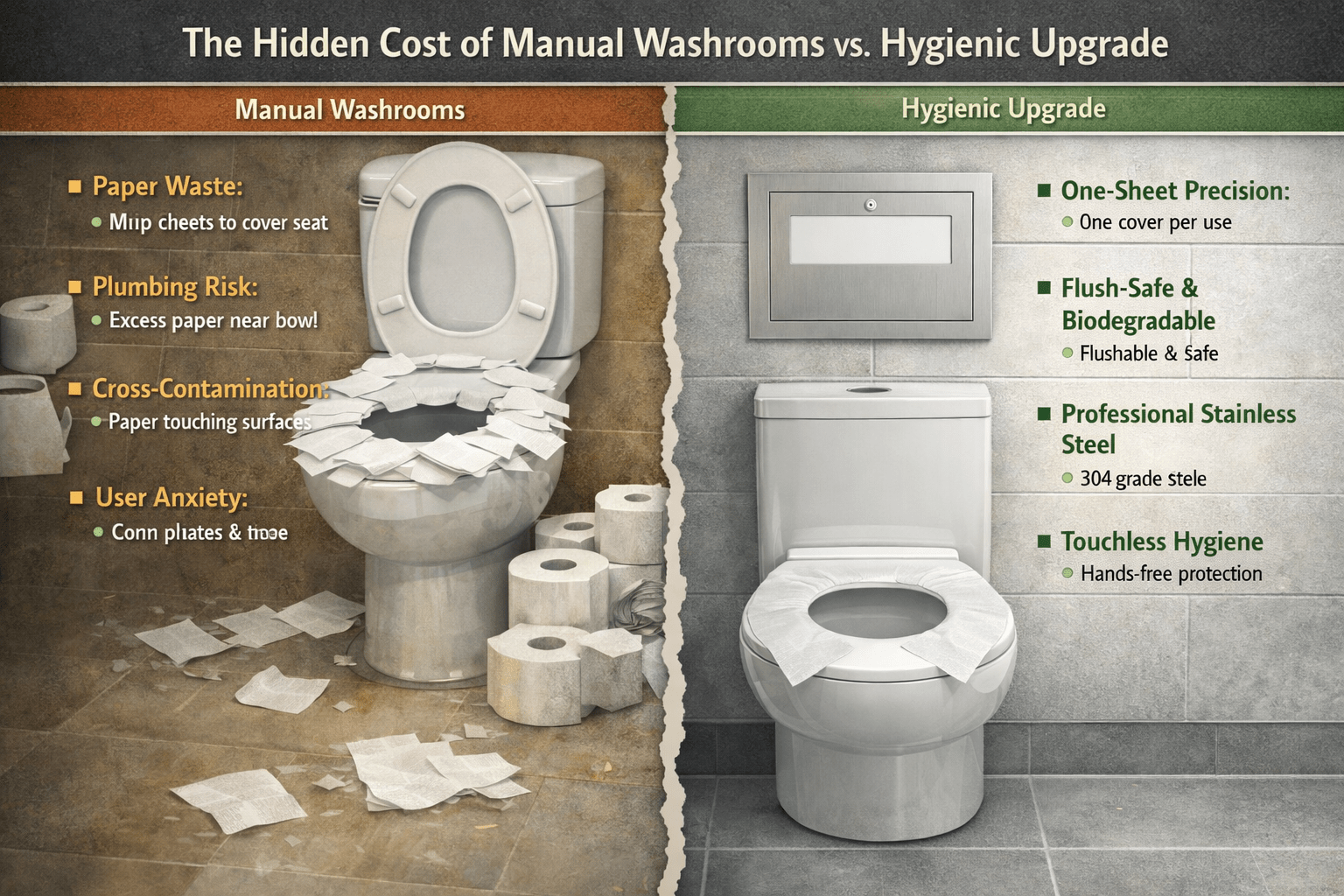
Using a toilet seat cover:
-
Minimizes direct skin contact
-
Reduces cross-contamination risks
-
Improves confidence while using public toilets
-
Encourages better hygiene behavior
In modern washrooms, toilet seat covers and toilet seat liners have become a standard hygiene layer—especially in high-footfall environments.
What Is a Toilet Seat Cover?
A toilet seat cover is a disposable protective layer, usually made from paper or biodegradable material, designed to sit between the user and the toilet seat.
Common Types of Toilet Seat Covers
-
Disposable paper toilet seat covers
- Flushable toilet seat liners
- Water-soluble hygiene liners
They are commonly found in:
-
Corporate offices
-
Shopping malls
-
Airports & railway stations
- Hospitals & healthcare facilities
- Hotels & premium restrooms
Why You Should Use a Toilet Seat Cover
Using a toilet seat cover is a small habit with big hygiene benefits:
-
Acts as a physical barrier between the skin and the seat.
-
Reduces exposure to bacteria and residual moisture.
-
Improves user comfort in shared toilets.
- Supports hygiene compliance in public washrooms.
- Eco-friendly options dissolve easily after flushing.
How to Use Toilet Seat Covers (Step-by-Step Guide)
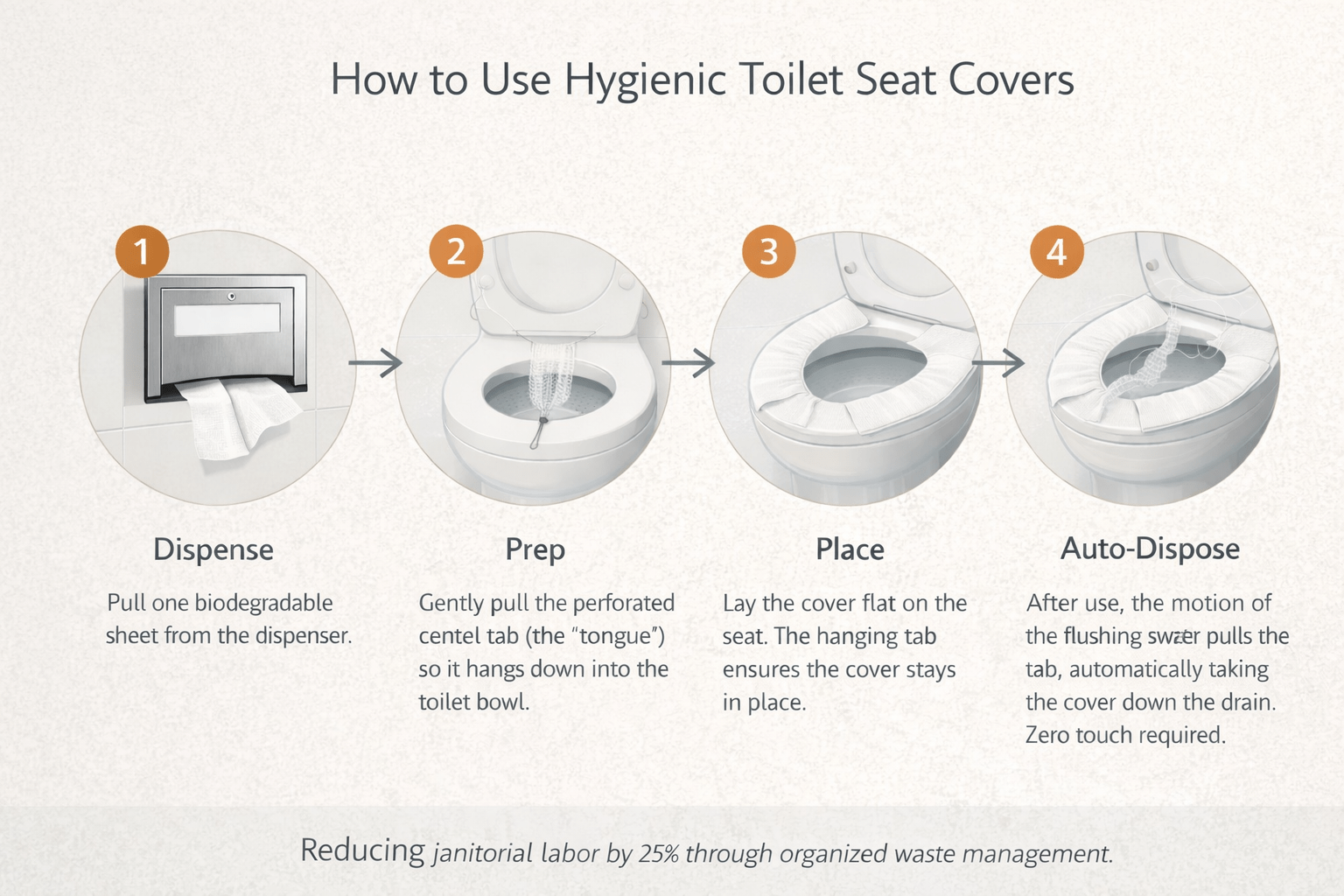
Understanding how to use toilet seat covers correctly ensures maximum hygiene and proper disposal.
Step 1: Wash or Sanitize Your Hands
Before handling the seat cover, clean your hands to avoid transferring germs onto the cover.
Step 2: Take One Toilet Seat Cover from the Dispenser
Pull out a single sheet carefully without touching the surrounding surfaces.
Step 3: Identify the Correct Orientation
Most toilet seat covers have:
- A wider rounded section for the seat
- A flap or extension that hangs inside the bowl
This flap helps prevent shifting and ensures better coverage.
Step 4: Place the Toilet Seat Cover Properly on the Seat
Lay the cover flat on the toilet seat, ensuring:
-
Full seat coverage
-
The flap drops naturally into the bowl
-
No folds or overlaps
This step is crucial when learning how to put a toilet seat cover on properly.
Step 5: Use the Toilet Normally
Once placed, use the toilet as usual without adjusting the cover.
Step 6: Dispose of the Toilet Seat Cover Correctly
-
Flushable liners: Can be flushed after use
- Non-flushable covers: Dispose of them in the bin
Always follow washroom signage to avoid plumbing issues.
Common Mistakes to Avoid While Using Toilet Seat Covers
Even with good intent, incorrect usage reduces effectiveness.
Avoid these common errors:
-
Placing the cover upside down
-
Letting it touch the floor
-
Folding or tearing the cover
-
Flushing non-flushable paper covers
-
Reusing a disposable seat cover
Correct placement and disposal are key to maintaining hygiene.
Toilet Seat Cover vs Toilet Seat Liner
| Feature | Toilet Seat Cover | Toilet Seat Liner |
| Material | Paper / biodegradable | Thin water-soluble paper |
| Flushable | Depends on type | Usually yes |
| Thickness | Slightly thicker | Lightweight |
| Usage | Public & commercial toilets | High-footfall washrooms |
| Hygiene Level | High | High |
Are Toilet Seat Covers Really Hygienic?
Toilet seat covers are not meant to replace cleaning—but they add an essential protection layer.
When used correctly, they:
-
Reduce direct contact with contaminated surfaces
-
Improve psychological comfort
- Support overall washroom hygiene systems
For best results, seat covers should always be paired with:
-
Hand washing
-
Proper disposal habits
-
Well-maintained washroom infrastructure
Why Leading Commercial Spaces Rely on Toilet Seat Covers
Airports & Transit Hubs
High-footfall washrooms in airports and transit hubs are used by thousands of people every hour. Toilet seat covers help reduce direct contact with frequently used toilet seats, maintain hygiene during peak hours, and improve user confidence in public toilets.
Corporate Offices & Premium Workplaces
In corporate offices, washroom hygiene plays a key role in employee comfort and workplace experience. Toilet seat covers support clean, professional washrooms while reinforcing hygiene standards in shared office toilets.
Hospitals & Healthcare Facilities
Hospitals and clinics require strict hygiene control. Toilet seat covers act as a physical hygiene barrier, helping reduce exposure to bacteria and supporting infection prevention in patient and visitor washrooms.
Shopping Malls & Commercial Complexes
Malls experience continuous washroom usage throughout the day. Toilet seat covers improve cleanliness perception and help maintain hygiene in public washrooms with diverse user groups.
Hotels, Restaurants & Hospitality Spaces
In hospitality environments, toilet seat covers enhance guest trust, comfort, and overall washroom experience, especially in premium restrooms and high-turnover facilities.
Frequently Asked Questions (FAQs)
Q1. How to use toilet seat covers properly?
Place the cover flat on the seat with the flap hanging inside the bowl, use normally, and dispose as instructed.
Q2. How to put a toilet seat cover on correctly?
Ensure full seat coverage, correct orientation, and avoid folding or tearing.
Q3. How to use toilet seat liners?
Use them the same way as seat covers; most liners are flushable after use.
Q4. Are toilet seat covers reusable?
No. Toilet seat covers are designed for single use only.
Q5. Are toilet seat covers safe for children?
Yes, when placed correctly and disposed of properly.
Conclusion: Small Hygiene Steps Make a Big Difference
Understanding how to use toilet seat covers is a simple yet powerful step toward better personal and public hygiene. In shared washrooms, small actions—like proper seat cover usage—help create safer, cleaner environments for everyone.
Clean habits begin with informed choices. The next time you use a public toilet, don’t skip the seat cover—it’s a small step with lasting impact.
Browse Our Trending Categories
Euronics at KBIS 2026: A Manufacturing Story on an International Floor
Redefining Hygiene in Modern Hand Dryers